Showing posts with label Propagation. Show all posts

Tuesday, December 16, 2008

K9LA's Amateur Radio Propagation Web Site


General Propagation Articles

Where Do K and A Come From?

Day-to-Day Variability of the F2 Region

Noise

The Formation of the Ionosphere

Polarization

Disturbances to Propagation

A Look Inside the Auroral Zone

Propagation Planning for DXpeditions

Measuring the Ionosphere

Find them at http://www.google.com/search?q=hf+propagation+k9&btnG=Search&hl=en&sa=2

Friday, December 12, 2008

ARCI: Solar Activity and HF Propagation

The Sun–Earth Interconnect
Since the late 1800s, it was noted solar activity affected telegraphic lines, and ater, radio communications. However, there was no scientific proof for this link. from the 1920s onward, radio amateurs clearly correlated HF propagation and the MUF to the solar cycle. But again, there was no scientific proof. Astronomers and physicists knew there was a sun–earth connection, but without direct observational data, it remained an un proven scientific theory. The scientific proof did not come until quite recently – basically, the space age – when we got our first look at the sun from outside our protective atmosphere. In the 1970s, the Voyager spacecrafts were the first to confirm the existence of the solar wind. It was not until Skylab that increases in radiation and the solar wind were linked to solar flares, and coronal mass ejections (CME) were first detected. The sun-earth interconnect finally became a scientific fact.

Since then, numerous satellites and ground based instruments monitor the sun and our geomagnetic field in realtime. Today, the radio amateur and QRPer has a wealth of solar information available via the internet that professional astronomers did not have a decade ago. This article, in part, describes how to interpret this internet data, and some of the terminology encountered in the daily reports and solar data from NOAA. Much of the solar physics in this article has been developed by astrophysicists in the past 15 years, and not yet available in other than scientific journals.

More at http://www.qrparci.org/mambo/pdf/FDIM81.pdf

Sunday, November 30, 2008

Effects of the Atmosphere on HF Communications

This is a nice little tutorial about the effects of the atmosphere on HF communications by the Naval Postgraduate School.


In this module you will learn hoe the lower frequency radio spectrum is affected by the environment. Particular emphasis is on HF transmissions and how knowledge about the sun and ionosphere will help you predict how and why HF transmissions vary with time of day, latitude, season and space weather. You should progress through the module in the order below. There are no online answers to the study questions, but you may contact the instructor if there is something you do not understand. Each page below will have navigation button at the bottom of the page that will allow you to return here (the index) or go to the previous or next page.

Get it at http://www.weather.nps.navy.mil/~psguest/EMEO_online/module3/module_3_index.html

Saturday, November 8, 2008

The Sun Shows Signs of Life

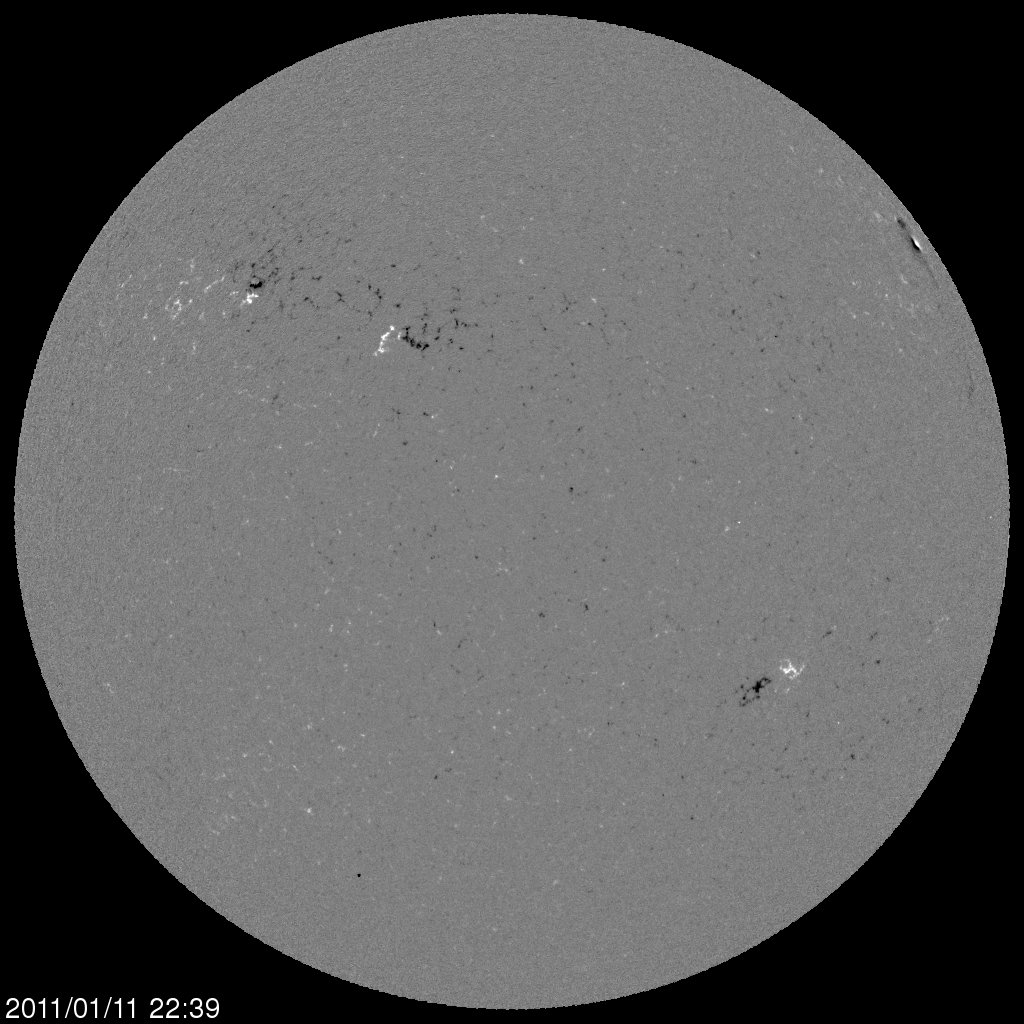
Nov. 7, 2008: After two-plus years of few sunspots, even fewer solar flares, and a generally eerie calm, the sun is finally showing signs of life.

"I think solar minimum is behind us," says sunspot forecaster David Hathaway of the NASA Marshall Space Flight Center.


More at http://science.nasa.gov/headlines/y2008/07nov_signsoflife.htm?list69914

Tuesday, October 21, 2008

Zone to Zone FOT Propagation

Here is good propagation tool that you can use during the CQWW SSB contest this weekend.
ZoneProp uses a widely accepted propagation engine to determine the band on which a contestant in one CQ DX zone is likely to be able to contact a contestant in another CQ DX zone taking into account the current geomagnetic activity.

Check it out at http://www.radiosport.ca/zoneprop/

Sunday, October 12, 2008

Another Cycle 24 Sunspot Today


Looks like a pattern is developing.

Southgate ARC: A 'new-cycle' sunspot emerges

A 'new-cycle' sunspot belonging to Solar Cycle 24 is emerging near the sun's northeastern limb.

This is the third time in as many weeks that a new-cycle sunspot has interrupted the year's remarkable run of blank suns.

The accelerating pace of new-cycle sunspot production is an encouraging sign that, while solar activity remains very low, the sunspot cycle is unfolding more or less normally. We are not stuck in a permanent solar minimum.

Readers with solar telescopes should train them on the sun this weekend to observe sunspot genesis in action.

Visit http://spaceweather.com for updates

Thursday, October 2, 2008

Spotless Sun: Blankest Year of the Space Age

Sept. 30, 2008: Astronomers who count sunspots have announced that 2008 is now the "blankest year" of the Space Age.

As of Sept. 27, 2008, the sun had been blank, i.e., had no visible sunspots, on 200 days of the year. To find a year with more blank suns, you have to go back to 1954, three years before the launch of Sputnik, when the sun was blank 241 times.

"Sunspot counts are at a 50-year low," says solar physicist David Hathaway of the NASA Marshall Space Flight Center. "We're experiencing a deep minimum of the solar cycle."

More at http://science.nasa.gov/headlines/y2008/30sep_blankyear.htm?list1066509

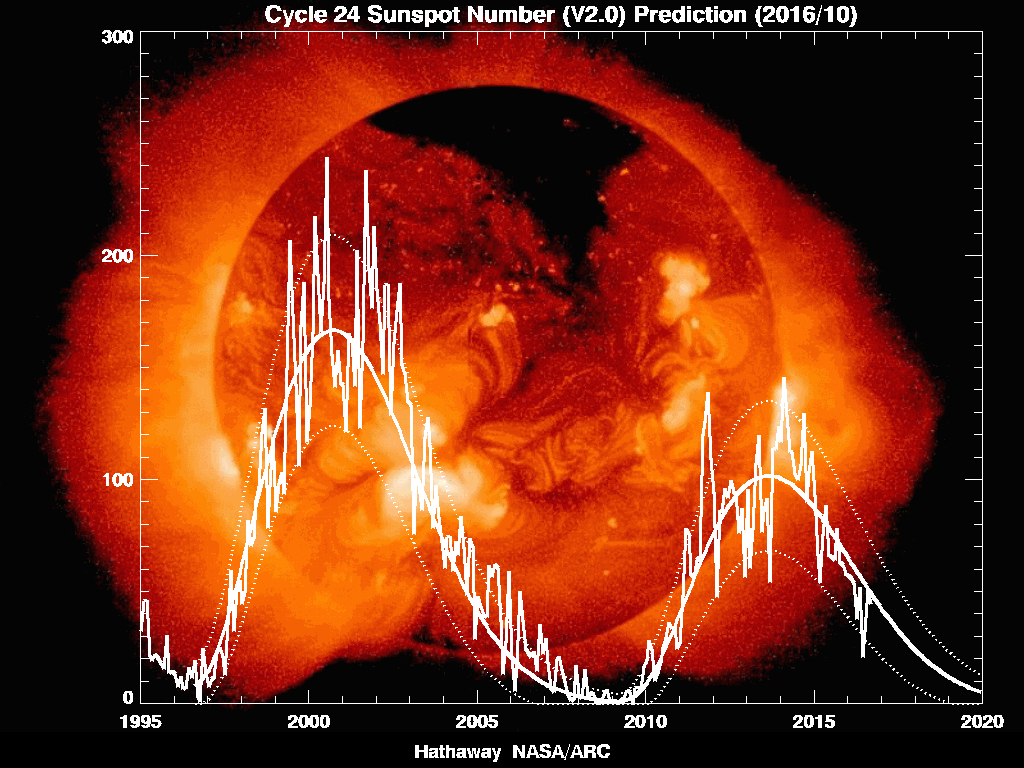
Solar Cycle Prediction (Updated 2008/09/02)


Predicting the behavior of a sunspot cycle is fairly reliable once the cycle is well underway (about 3 years after the minimum in sunspot number occurs [see Hathaway, Wilson, and Reichmann Solar Physics; 151, 177 (1994)]). Prior to that time the predictions are less reliable but nonetheless equally as important. Planning for satellite orbits and space missions often require knowledge of solar activity levels years in advance.
A number of techniques are used to predict the amplitude of a cycle during the time near and before sunspot minimum. Relationships have been found between the size of the next cycle maximum and the length of the previous cycle, the level of activity at sunspot minimum, and the size of the previous cycle.

More at http://solarscience.msfc.nasa.gov/predict.shtml

Monday, September 1, 2008

DailyTech: Sun Makes History: First Spotless Month in a Century

Drop in solar activity has potential effect for climate on earth.

The sun has reached a milestone not seen for nearly 100 years: an entire month has passed without a single visible sunspot being noted.

The event is significant as many climatologists now believe solar magnetic activity – which determines the number of sunspots -- is an influencing factor for climate on earth.

According to data from Mount Wilson Observatory, UCLA, more than an entire month has passed without a spot. The last time such an event occurred was June of 1913. Sunspot data has been collected since 1749.

More at http://www.dailytech.com/Sun+Makes+History+First+Spotless+Month+in+a+Century/article12823.htm

WVDXA: A Month Without Sunspots

The sun has reached a milestone not seen for nearly 100 years: an entire month has passed without a single visible sunspot being noted.

The event is significant as many climatologists now believe solar magnetic activity – which determines the number of sunspots -- is an influencing factor for climate on earth.

Wednesday, June 11, 2008

SOLAR CYCLE 24 .COM

If you are interested in things solar, http://www.solarcycle24.com/ is a site where you'll find almost everything you'll want to know.

Sunday, May 18, 2008

KN4LF DAILY LF/MF/HF/6M FREQUENCY RADIOWAVE PROPAGATION FORECAST

For those who like to look into future here is a nice forecast site by Thomas Giella, KN4LF, at http://www.kn4lf.com/kn4lf6.htm It is very comprehensive. He also moderates an e-mail reflector. Info about that can be found at http://montreal.kotalampi.com/mailman/listinfo/kn4lf
My website is a conglomeration of solar, space weather, geomagnetic data, as well as my KN4LF 160 Meter (LF, MF, HF, VHF) Radio Propagation.